
Why Delhi NCR Remains India’s Top Real Estate Destination
When investors ask where to put their money in Indian real estate, Delhi NCR consistently tops the answer. The National Capital Region — spanning Delhi, Gurugram, Noida, Greater Noida, Ghaziabad, and Faridabad — is home to more than 32 million people, the country’s highest concentration of Fortune 500 offices, and an infrastructure pipeline worth lakhs of crores of rupees. This combination makes property investment in Delhi NCR one of the most reliable wealth-building strategies available to Indian investors today.
Over the last five years, the region’s residential market has delivered extraordinary results. Prices have surged, unsold inventory has shrunk dramatically, and new micro-markets have emerged as high-growth corridors almost overnight. Whether you are a first-time buyer, a seasoned investor, or an NRI looking to park capital back home, understanding the Delhi NCR property landscape in 2026 is essential before making any decision.
81%Price rise over 5 years (NCR residential avg.)
98%Appreciation in Greater Noida (5-year)
₹8,300Avg. residential rate per sq ft (Q1 2025)
51%↓Drop in unsold housing stock since 2020
Key Drivers Powering the Delhi NCR Property Market in 2026
1. Infrastructure Transformation
No single factor shapes Delhi NCR real estate more than infrastructure. Major expressways — the Dwarka Expressway, Yamuna Expressway, and Eastern Peripheral Expressway — have dramatically reduced travel times and opened entirely new residential and commercial corridors. Every new metro station creates a fresh real estate micro-market around it within months.
The biggest infrastructure catalyst, however, is the Jewar International Airport (Noida International Airport) in Greater Noida, which is widely expected to be operational by the end of 2026. Airports historically trigger a 20–40% appreciation in surrounding land values, and the Yamuna Expressway corridor is already reflecting this anticipation in its price curves.
2. Corporate and Employment Growth
Gurugram and Noida together host the highest density of multinational companies, IT firms, startups, and financial institutions outside of Mumbai. Office leasing in both cities touched record levels in early 2026, with demand coming from global technology firms, BFSI players, and GCC (Global Capability Centre) expansions. Wherever high-quality employment grows, residential demand follows — making proximity to business districts one of the strongest signals for future property appreciation.
3. Supply-Demand Imbalance Favouring Investors
Unsold housing inventory in Delhi NCR stood at approximately 84,500 units in early 2025 — less than half the 173,000 units that sat unsold in early 2020. As new launches struggle to keep pace with absorption, prices are being pushed upward across all segments: affordable, mid-range, and luxury alike. For investors, this tightening supply environment means that properties bought today are likely to appreciate further as inventory continues to shrink.
4. RERA-Driven Buyer Confidence
The Real Estate Regulation and Development Act has fundamentally transformed buyer sentiment in Delhi NCR. Mandatory project registration, transparent timelines, and builder accountability have reduced fraud risk and brought fence-sitters back into the market.
Top Property Investment in Delhi NCR
Not all locations in Delhi NCR offer equal returns. Here are the six areas that analysts, developers, and seasoned investors are watching most closely in 2026:
- 01Noida Sector 150 & Noida ExpresswayA green-cover corridor with over 80% open space, Sector 150 offers premium residential projects at relatively competitive prices.
- 02Yamuna Expressway & Greater Noida WestThis is the single most compelling growth corridor in Delhi NCR right now. Greater Noida West (Noida Extension) adds an affordable entry point with strong social infrastructure already in place.
- 03Dwarka Expressway, GurugramOnce a disputed construction site, the Dwarka Expressway has matured into one of Gurugram’s most in-demand residential addresses. Prices are rising quickly, yet still undercut established Gurugram localities. New office buildings along the expressway are driving rental demand, making this ideal for buy-to-let investors.
- 04New Gurugram (Sectors 81–115)New Gurugram is evolving into a planned township with wide roads, modern amenities, and large luxury projects.
- 05Golf Course Road & Extension, GurugramIndia’s most prestigious residential address outside South Delhi. Limited land supply ensures values continue to climb year on year.
- 06Ghaziabad & NH-58 CorridorGhaziabad offers the best affordability in Delhi NCR while benefitting from the same metro expansion and expressway development rippling across the region.
Residential vs. Commercial: What Should You Invest In?
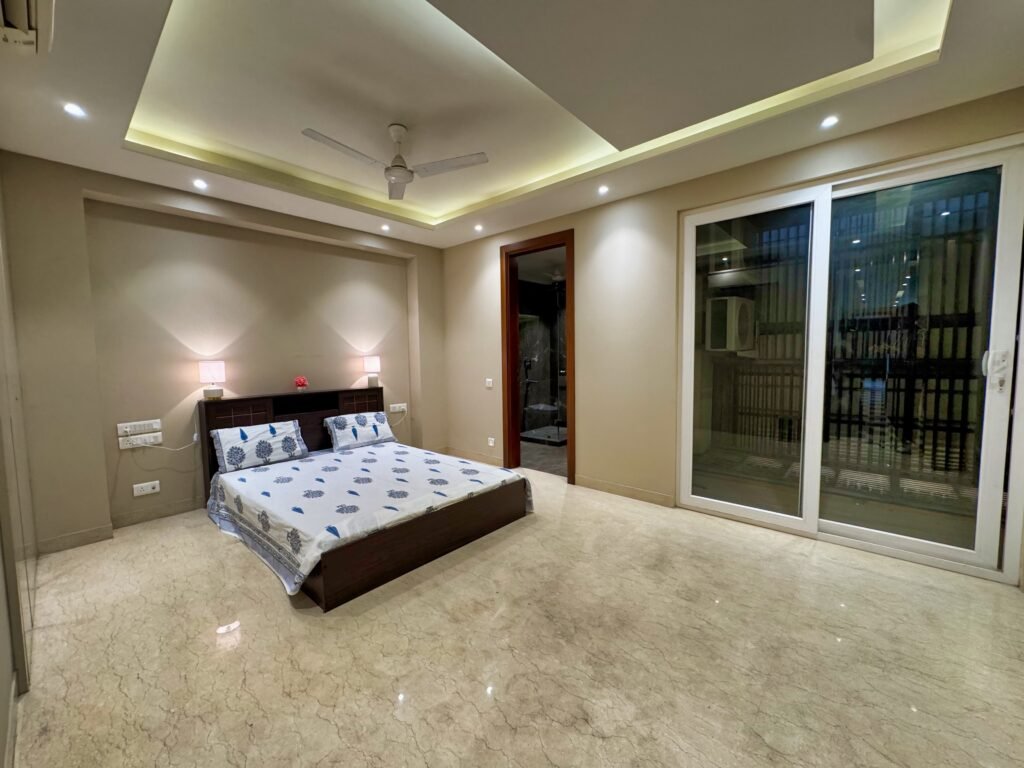
Delhi NCR offers a full spectrum of investment options. For residential buyers, apartments in the mid-luxury segment (₹80 lakh–₹2.5 crore) are seeing the highest absorption velocity, particularly in Noida and Gurugram. Luxury villa projects and ultra-premium towers from developers like Godrej, L&T Realty, and DLF command ₹6–8 crore and above, offering strong rental yields of 4–8% annually to investors targeting HNI tenants.
Is 2026 the Right Time to Invest in Delhi NCR?
Market analysts broadly agree that 2026 represents a strategic window — neither the rock-bottom entry point of 2020 nor the fully-priced peak of a matured bull run. Prices have risen sharply, but several high-potential micro-markets (particularly along the Yamuna Expressway and in Greater Noida West) still offer pre-appreciation pricing ahead of the Jewar Airport becoming operational.
For long-term investors with a horizon of 3–5 years, buying in developing corridors today could deliver substantial gains by 2027–2028 as infrastructure projects reach completion and corporate occupancy fills the surrounding area. NRI investors in particular are finding 2026 to be an opportune moment, given the combination of favourable currency exchange rates, RERA-backed project security, and continued economic growth in India.
The risk of waiting is real: as inventory tightens further and more projects get absorbed, the price floor will rise. Entry points available today may not exist twelve months from now — especially in high-growth corridors where demand is outpacing supply.
✦ Smart Investor Checklist: Before You Buy in Delhi NCR
- Verify RERA registration — Check the UP-RERA or Haryana RERA portal before signing anything. A registered project is legally accountable for timelines and promises.
- Prioritise infrastructure proximity — Properties within 2 km of a metro station, expressway interchange, or business district consistently outperform on both yield and appreciation.
- Research the developer’s delivery record — Stick to builders with a verified track record of on-time possession and post-possession service.
- Understand the supply pipeline — Know how many units are planned in your target micro-market over the next 2–3 years. Oversupply in a pocket can cap appreciation.
- Factor in all costs — Beyond the base price, account for GST, stamp duty, registration charges (which vary between UP and Haryana), maintenance deposits, and loan processing fees.
- Evaluate rental demand independently — Visit the locality, speak to local brokers, and check rental listings to validate yield assumptions before committing capital.
Final Verdict: Delhi NCR’s Property Story Is Far from Over
Property investment in Delhi NCR in 2026 is not about catching a trend at its peak — it is about positioning yourself ahead of the next wave of infrastructure-driven appreciation. From Noida’s tech corridors and the Jewar Airport windfall in Greater Noida, to Gurugram’s world-class office ecosystem and the affordability play in Ghaziabad, the region offers something compelling for every investor profile and budget.
Do your due diligence, choose RERA-compliant projects from trusted developers, anchor your decision to infrastructure timelines, and think long-term.